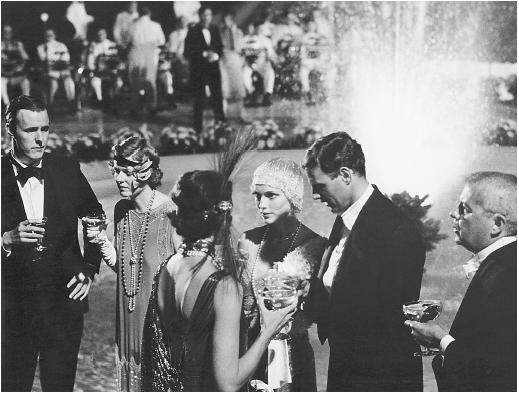
For Frances the church has very little to do with God; it's more a shrine to Englishness: flowers, history, familiar - if meaningless - hymns, your own kneeler and a sort of bracing draughtiness, long out of favour.
Wednesday, 9 July 2008
Very evocative passage in Justin Cartwright's The Promise of Happiness. Amidst the tired soul-searching on what defines Englishness, this'll do for me:


Tuesday, 1 July 2008
Girls and Intellectuals
Geoff Dyer:
I spent my twenties labouring - more accurately, idling - under the misconception that women liked intellectuals. In Africa I am confronted by an elemental truth: they prefer rangers and pilots...
Web 2.0 Countries?
I presume this observation is old-hat now, but I found the selection of countries that Feed Informer put as the 'likely guesses' on their registration form (before listing the rest alphabetically) pretty interesting. I wonder if it was compiled from data?
United States
United Kingdom
Australia
Canada
Spain
China
Sweden
Denmark
France
Germany
Italy
Russia
Where's India? - I thought,
x
Technorati Tags: Feed Informer, Web 2.0 Countries, India, Connectivity
United States
United Kingdom
Australia
Canada
Spain
China
Sweden
Denmark
France
Germany
Italy
Russia
Where's India? - I thought,
x
Technorati Tags: Feed Informer, Web 2.0 Countries, India, Connectivity
Diary vs Blog
Knowing that I was going to an experiment with a blog, I brought a few of my old diaries out with me to The Hamptons. They're a rag-bag and misleading look at my life - spiking each year in the summer (when I've tended to travel) as well as the obligatory January 1st - 3rd resolution season - but I was worried that my love affair with the blog might spell the end for those wistful diary-keeping days. Ah, me...
Not so, I've realised.
My diary was a two-headed beast, and the two sat awkwardly beside on another. On one neck was my deep introspection. (An example at random from my Peruvian journal: "I miss laughing with her, and watching her laugh with other people.") Whilst on the other was my monkish transcribing of extracts: from the books I had with me, from newspapers, or from the great ideas in my head that seemed to warrant a wider audience.
Now I can divide the two.
The fluff can stay behind closed covers, biding its time mischievously until the biographers arrive, whilst the larger musings can fight it out in the blogarena.
One caveat to this. Like the best non-fiction writers, the best bloggers seem to be alive to the sweet taste of allusion. A lot of columnists tell us just enough about their lives to hook us; again, Geoff Dyer is the master:
Desperately lonely in Peru, I came across this in a Geoff Dyer article on - was it statues?:
Technorati Tags: Geoff Dyer, The Great War, Diary Keeping
Not so, I've realised.
My diary was a two-headed beast, and the two sat awkwardly beside on another. On one neck was my deep introspection. (An example at random from my Peruvian journal: "I miss laughing with her, and watching her laugh with other people.") Whilst on the other was my monkish transcribing of extracts: from the books I had with me, from newspapers, or from the great ideas in my head that seemed to warrant a wider audience.
Now I can divide the two.
The fluff can stay behind closed covers, biding its time mischievously until the biographers arrive, whilst the larger musings can fight it out in the blogarena.
One caveat to this. Like the best non-fiction writers, the best bloggers seem to be alive to the sweet taste of allusion. A lot of columnists tell us just enough about their lives to hook us; again, Geoff Dyer is the master:
Desperately lonely in Peru, I came across this in a Geoff Dyer article on - was it statues?:
I see your face everywhere, wandering through it like rain and the drifting steam of streets. I wake at four in the morning and think of you doing ordinary things: hunting for your glasses that you can never find, taking the tube to work, buying wine at the supermarket.But my favourite, recently discovered, is this. In his book on The Great War, GD spends a few pages discussing the letters to and from loved ones, before inserting this:
Propped against the bar of the Cafe de l'Industrie, I open an envelope with my name in your writing. The second paragraph wonders, in your latest flourish of colloquial English, how I am 'bearing up.'
Technorati Tags: Geoff Dyer, The Great War, Diary Keeping
Interactive learning: always a good thing?
This is too good, not to post in full: from David Smith.
Technorati Tags: Esther Dyson, interactive learning
"There are 120 contributors [to a magazine feature that asked: 'what do you believe is true, even though you cannot prove it?]. From these, I have selected Esther Dyson. I have her dictum, 'Always make new mistakes', as a fridge magnet and her Edge contribution is something every teacher should ponder. Here's a substantial excerpt:"
We're living longer, and thinking shorter.
[Disclaimer: Since I'm not a scientist, I'm not even going to attempt to take on something scientific. Rather, I want to talk about something that can't easily be measured, let alone proved. And second, though what I'm saying may sound gloomy, I love the times we live in. There has never been a time more interesting, more full of things to explain, interesting people to meet, worthy causes to support, challenging problems to solve.]
It's all about time. I think modern life has fundamentally and paradoxically changed our sense of time. Even as we live longer, we seem to think shorter. Is it because we cram more into each hour? Or because the next person over seems to cram more into each hour? For a variety of reasons, everything is happening much faster and more things are happening. Change is a constant.
It used to be that machines automated work, giving us more time to do other things. But now machines automate the production of attention-consuming information, which takes our time. For example, if one person sends the same e-mail message to 10 people, then 10 people have to respond.
The physical friction of everyday life—the time it took Isaac Newton to travel by coach from London to Cambridge, the dead spots of walking to work (no iPod), the darkness that kept us from reading—has disappeared, making every minute not used productively into an opportunity cost.
And finally, we can measure more, over smaller chunks of time. From airline miles to calories (and carbs and fat grams), from friends on Friendster to steps on a pedometer, from realtime stock prices to millions of burgers consumed, we count things by the minute and the second.
Unfortunately, this carries over into how we think and plan: Businesses focus on short-term results; politicians focus on elections; school systems focus on test results; most of us focus on the weather rather than the climate. Everyone knows about the big problems, but their behavior focuses on the here and now. …
How can we reverse this? It's a social problem, but I think it may also herald a mental one—which I describe as mental diabetes. Whatever's happening to adults, most of us grew up reading books (at least occasionally) and playing with "uninteractive" toys that required us to make up our own stories, dialogue and behavior for them. Today's children are living in an information-rich, time-compressed environment that often seems to replace a child's imagination rather than stimulate it. I posit that being fed so much processed information—video, audio, images, flashing screens, talking toys, simulated action games—is akin to being fed too much processed, sugar-rich food. It may seriously mess up children's information metabolism and their ability to process information for themselves. In other words, will they be able to discern cause and effect, to put together a coherent story line, to think scientifically?
I don't know the answers, but these questions are worth thinking about, for the long term.
Technorati Tags: Esther Dyson, interactive learning
Subscribe to:
Posts (Atom)


 Posts
Posts